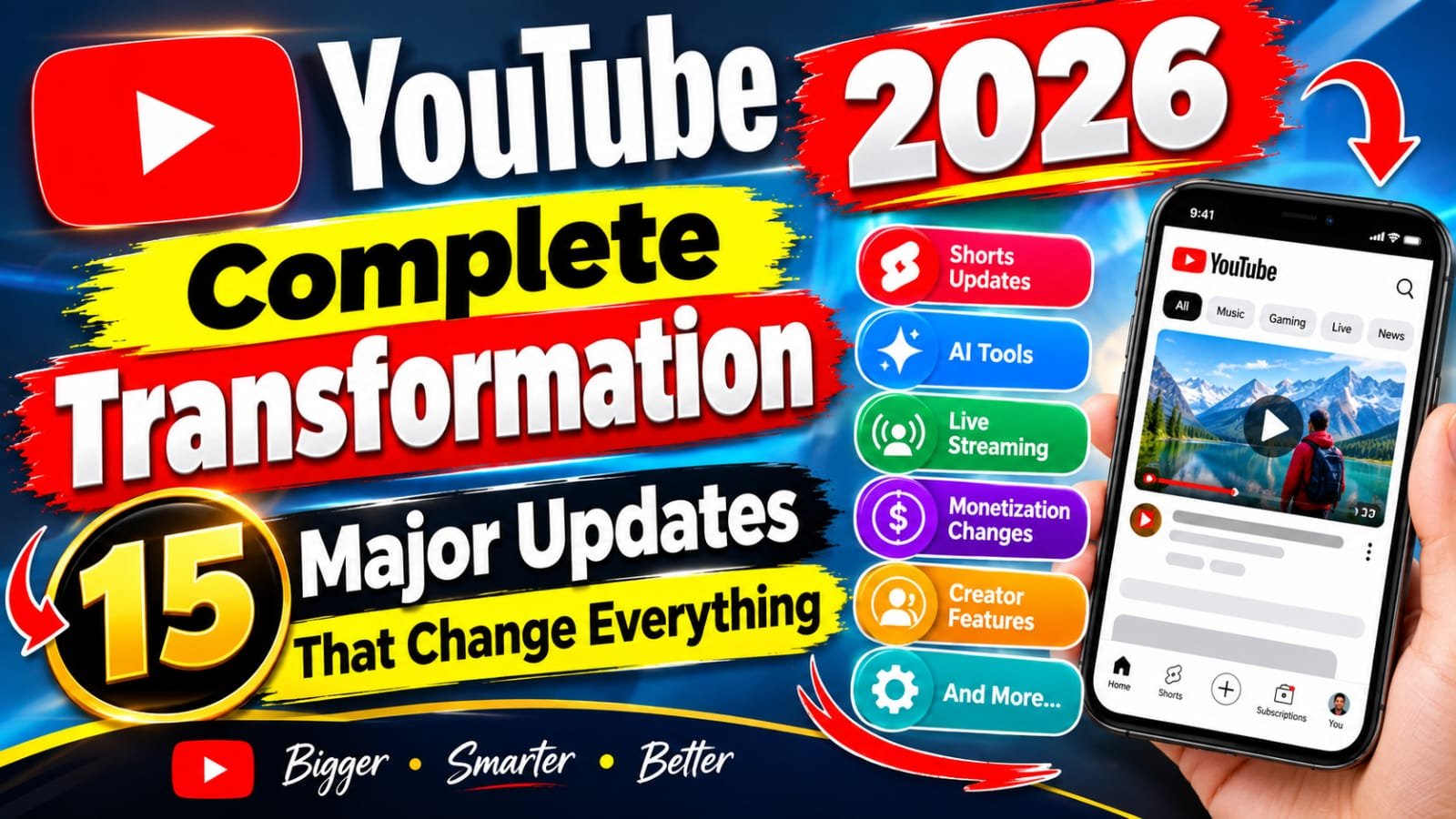
YouTube has rolled out its biggest overhaul in years, and it’s not just another minor tweak. From how views are counted to how creators earn money, almost every corner of the platform has shifted. Here’s a breakdown of the 15 most important changes you need to know about.
1. View Counting Just Got Instant
Starting August 24, 2026, YouTube counts a view the moment a video starts playing. The old strict filtering system is gone. This aligns YouTube with TikTok and Instagram, where views are counted instantly. The upside? View counts will look dramatically higher for many videos. The catch? YouTube introduced a separate “Engaged Views” metric visible only in Analytics, which tracks whether people actually stick around.
2. Monetization Thresholds Doubled
This is the change that’s shaking the creator community. Starting February 1, 2027, new creators need 8,000 qualified watch hours in the past year or 20 million Shorts views in 90 days to join the YouTube Partner Program. That’s double the old requirement of 4,000 hours or 10 million Shorts views. Existing YPP members are grandfathered in—their status won’t be affected.
3. Shorts Revenue Now Has a Maintenance Bar
Even if you’re already in YPP, earning from Shorts isn’t guaranteed anymore. You now need to maintain 10 million qualified Shorts views every 90 days to keep earning from the Shorts Creator Pool. Drop below that, and Shorts revenue pauses—though you stay in YPP and can still earn from long-form content. The revenue resumes once you cross the threshold again.

4. Custom Feeds Let You Build Your Own Homepage
YouTube is letting users design their own homepage tabs using conversational prompts. Want “witty podcasts for my 30-minute commute” or “evening wind-down with long documentaries”? Just type it, and YouTube creates a feed that auto-updates with fresh recommendations. You can save multiple feeds for different moods or interests. This is launching first in the US on web, mobile, and TVs.
5. Conversational Editing Powered by Gemini
YouTube integrated Gemini into Shorts and the YouTube Create app as a conversational editing assistant. You can start with a prompt, get a first draft, then keep chatting to refine it—trimming pauses, reordering frames, syncing music to the beat. You can switch between the AI assistant and manual editing at any time. In August 2026 alone, hundreds of thousands of channels used this per day.
6. YouTube Studio Becomes a Full Creative Partner
Studio now offers personalized feedback on early drafts, generates thumbnails matched to your channel’s style, and runs A/B tests on up to three different video cuts to see which hook performs best. You can also set up “Dynamic Thumbnails,” where YouTube’s systems decide which thumbnail each viewer sees. Ask Studio can even review your older videos and suggest refreshed thumbnails to help classic content find new audiences.
7. Likeness Detection Now Covers Your Voice
YouTube is expanding its likeness protection beyond just facial detection. Later in 2026, it will integrate speaking voice detection with facial detection to improve match accuracy. The likeness detection tool is also coming to the YouTube mobile app, so creators can enroll, get alerts, and take action on the go.
8. Shorts Get Seasons and Episodes
Shorts can now be organized into dedicated seasons and episodes, with custom thumbnails and sequential playback. This is a direct play for microdrama and episodic storytelling formats. Viewers can follow series more easily, and creators can build deeper engagement with structured narratives.
9. Live Showdowns Turn Fan Funding Into Competition
Creators who co-host live streams can now launch “Live Showdowns”—head-to-head matchups where viewers send Super Chats, gifts, and chats to push their chosen creator’s score forward in real time. It’s a gamified way to rally communities and boost revenue during live events.
10. Real-Time Auto-Dubbing for Live Streams
Starting early 2027, YouTube will pilot Live auto-dubbing, which automatically translates a creator’s speech in real time so viewers can listen in their preferred language. With over 40% of live watch time coming from outside a creator’s home country, this could be a massive reach unlock.
11. Watch With Expands to All Long-Form Videos
The “Watch With” feature, which lets creators react live to content, is expanding beyond livestreams to include all eligible long-form videos. Creators can tap “React live” on any eligible video and jump into the conversation. Original creators get attribution and view credit, while reactors keep their ad revenue.
12. YouTube Shopping Expands to 35 Countries
The affiliate program is going global. By the end of 2026, YouTube Shopping will be in 35 countries. Amazon product tagging is expanding to India and Brazil, with more markets coming. Product tags now automatically show localized offers based on where viewers are watching from.
13. Ask YouTube Gets Shopping Intelligence
Ask YouTube can now answer questions about products shown on screen—even if they’re never mentioned in the transcript. Ask for a product review, and you’ll get a comparison table with attributes and categories. You can continue the conversation from search into the video watch page. It’s live in the Americas now.
14. GIFs Are Coming to Comments
Sometimes words aren’t enough. YouTube is adding GIF support to comments in the mobile app, with a searchable GIF library. This rolls out globally in fall 2026. TVs also get voice-to-text comments.
15. Premium Lite Expands Worldwide
YouTube’s lower-priced Premium Lite tier is now available in all countries where Premium exists. It offers ad-free viewing for most videos (excluding music and Shorts), offline downloads, and background play. Creators earn from Premium Lite based on watch time and views, with a 55% share for long-form and 45% for Shorts.
The Bottom Line
YouTube’s 2026 changes send a clear message: the platform is betting big on AI-powered creation tools while simultaneously raising the bar for monetization. For established creators, the new Studio tools and expanded shopping options open real revenue opportunities. For newcomers, the doubled thresholds mean the path to monetization just got steeper. The view counting change will inflate numbers across the board, but the new Engaged Views metric reveals what YouTube really cares about—whether people actually watch.