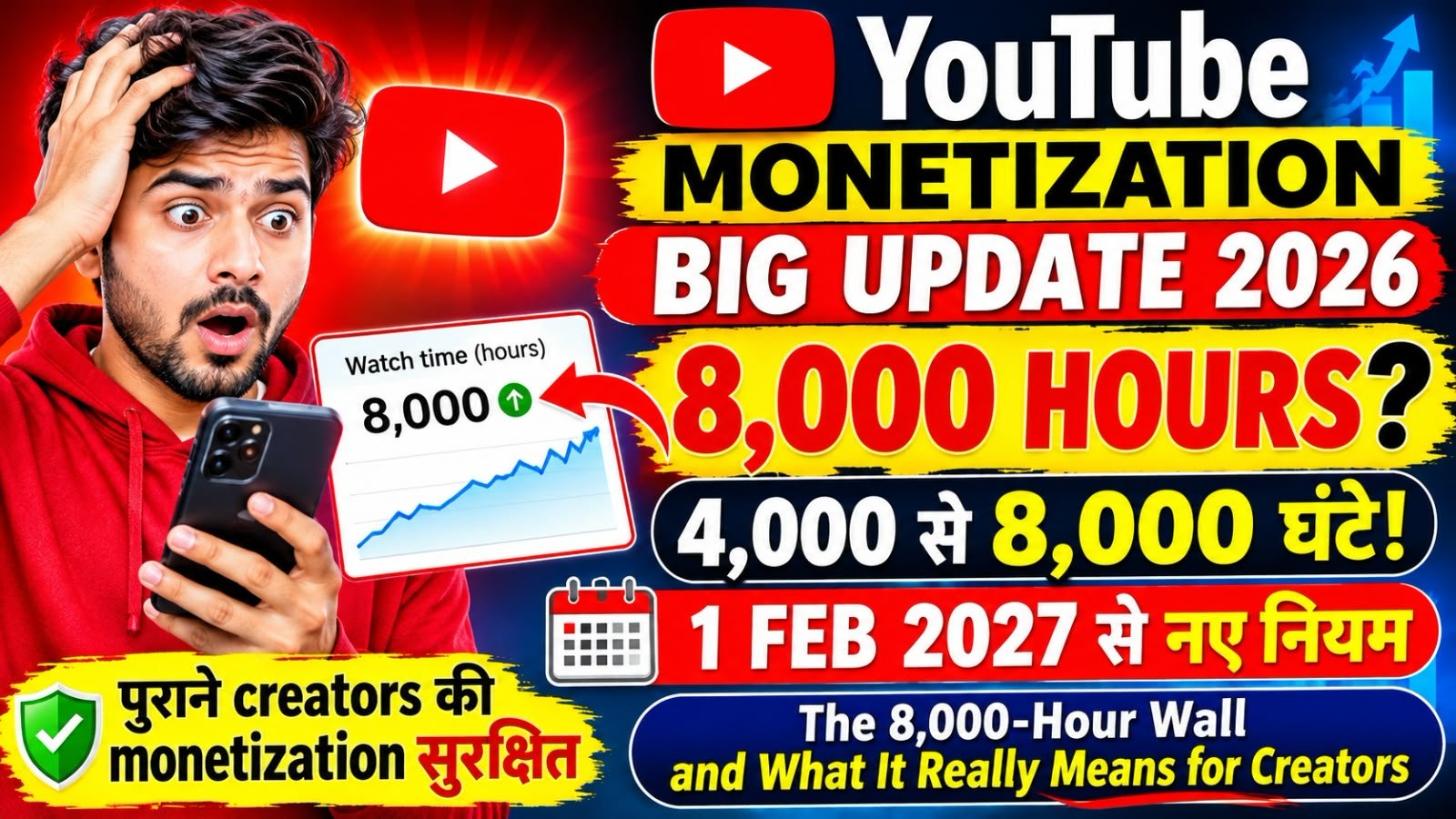
YouTube just announced its biggest Partner Program overhaul since 2018. The headline number is simple: the entry bar is doubling. But the real story is more nuanced—and if you’re a creator planning your next move, understanding the fine print matters more than the headline. Here’s what actually changed, when it takes effect, and who gets hit hardest.
The Core Change: Entry Requirements Double
Starting February 1, 2027, new creators applying for the YouTube Partner Program (YPP) will need to meet one of these two thresholds :
- Long-form route: 1,000 subscribers + 8,000 qualified watch hours in the past 12 months (up from 4,000)
- Shorts route: 1,000 subscribers + 20 million qualified Shorts views in the past 90 days (up from 10 million)
If you’re already in YPP, you stay in. YouTube has been explicit that existing members won’t be removed from the program . The change targets new applicants only.
The Hidden Trap: Shorts Maintenance Threshold
This is the part many creators are missing. Qualifying for YPP through Shorts isn’t a one-time achievement anymore. To keep earning ad revenue from Shorts, you need to maintain 10 million qualified Shorts views in the last 90 days .

If you drop below that, you don’t lose YPP membership. You can still earn from long-form videos. But Shorts revenue sharing pauses until you cross the 10-million threshold again .
One creator described the logic behind this: YouTube wants to reward creators who are “leaned in,” not one-hit wonders who had a single viral Short and then went quiet .
Who Actually Gets Hurt
The doubling sounds brutal, but the data tells a more specific story. A CreatorDB analysis found that the median active channel past 1,000 subscribers generates roughly 3,400 annual watch hours—about 43% of the new 8,000-hour bar, and 86% of the old 4,000-hour bar .
The change doesn’t reshape the entire pyramid. It lands on a thin band: channels in their first realistic year of monetization contention. The top quartile of channels already exceeds the new bar by 7x or more. The bottom third generates under 100 hours a year and was never close to qualifying anyway .
What’s surprising is which categories are most affected. Education and How-to & Style—mid-length instructional content, exactly what YouTube says it wants—have the highest stranded shares among major categories. Music has the lowest .
For Shorts, the impact is more concentrated. Among active channels posting Shorts, roughly 26,000 met the old 10-million-view bar with their last 20 Shorts. The doubling to 20 million cuts that pool roughly in half, to about 13,000 channels .
What YouTube Is Adding, Not Just Taking Away
The update isn’t purely restrictive. Three things are being added or expanded:
Premium Lite expansion. The cheaper, ad-light subscription tier is rolling out to all countries where Premium is available. Creators earn from Premium Lite subscriptions based on watch time and views, and YouTube says partners on average earn more when a user subscribes to Premium than when they watch ads .
New Shorts incentive programs. YouTube is launching tiered incentive programs for Shorts creators who may not hit the 10-million maintenance threshold. These include bonuses for YouTube Shopping, brand deal incentives, and revenue boosts for trend activations. Specific criteria haven’t been announced yet .
Accept-or-lose deadline. Existing YPP members must accept updated terms—the Watch Page Monetization Module, Shorts Monetization Module, and Commerce Product Module—by January 31, 2027. If you don’t accept, you stop earning from those features on February 1 .
The View-Counting Change Everyone’s Confusing with Monetization
Around August 24, 2026, YouTube also changed how it counts views. Views are now recorded the moment a video starts playing, rather than after a threshold of watch time .
This inflates public view counts, especially for content with low early retention. But YouTube separated the measurement: an “Engaged views” metric now tracks users who actually stay and watch, visible privately in Analytics .
This is separate from the YPP changes, but it matters for creators evaluating their own performance. Public view counts are no longer a reliable proxy for engaged audience—check your Analytics for the real numbers.
What to Do If You’re Affected
If you’re already in YPP: You’re safe. Accept the new terms before January 31, 2027. If your Shorts views hover near 10 million per 90 days, plan for potential revenue gaps and lean more on long-form or alternative income streams.
If you’re close to qualifying under the old rules: The clock is ticking. The old thresholds (4,000 hours / 10 million Shorts views) apply until February 1, 2027. If you can hit them before that date, you lock in YPP status under the existing rules .
If you’re just starting: The Shorts route is now a needle’s eye—only about 2% of Shorts-posting channels performed at even the old bar’s level, and the doubling halves that . Long-form content, despite the higher hour requirement, may be the more realistic path for most new creators. Focus on searchable, evergreen content that accumulates watch time over months, not viral spikes.
If you’re in education or instructional content: You’re statistically overrepresented in the stranded zone. YouTube says it wants this content, but the math makes qualification harder. Consider whether your content can drive enough watch hours per video—or whether you need to supplement with fan funding (available at the 500-subscriber early access tier) while building toward YPP .
The bottom line: YouTube is raising the price of admission, but the creators who treat this as a business rather than a lottery ticket will adapt. The 8,000-hour wall is steep, but it’s climbable with consistent, searchable content that earns genuine watch time—not just algorithmic luck.